The 2026 Mid-Year Voice AI Compliance Update: What Changed and What To Do
Voice Agents
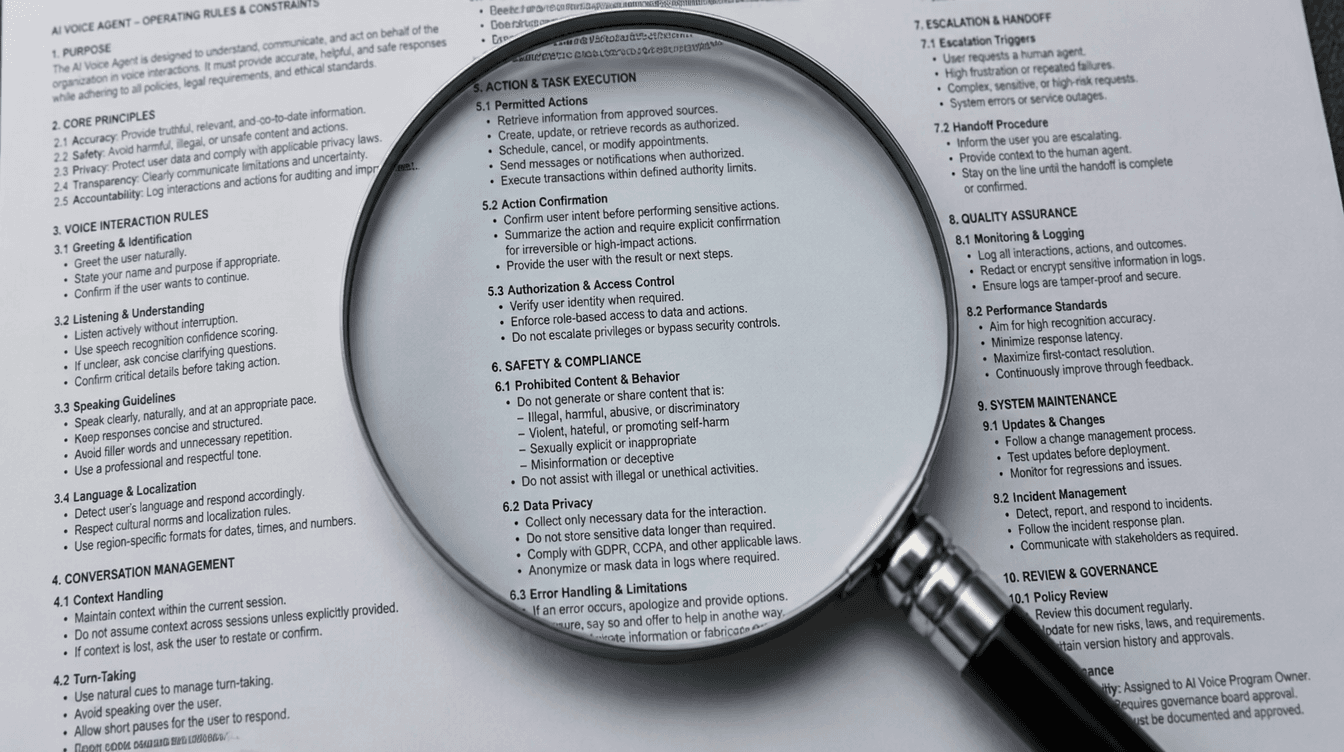
If there was one theme running under every product announcement at Customer Contact Week this year, it was this: compliance and governance have become AI's next frontier. Vendors are embedding consent handling, disclosure, and quality governance directly into contact center workflows — because the regulatory environment stopped being theoretical.
This mid-year update covers what actually changed in 2026, what's still pending, and the operational moves that matter. (The standard caveat applies: this is an operator's summary, not legal advice. Bring your counsel into the loop.)
The One-to-One Consent Rule Is Gone
The compliance change most operators still haven't internalized: the FCC's one-to-one consent rule — which would have required separate, individualized consent for each seller — was vacated by the Eleventh Circuit and subsequently rescinded by the FCC. The pre-2024 "prior express written consent" standard remains the operative framework for outbound calling.
What this means in practice: if you rebuilt consent flows for one-to-one, those flows aren't wasted — stricter consent is durable protection. But your legal exposure analysis, vendor requirements, and lead-purchasing standards should reflect the rule that's actually in force, not the one that was struck down.
AI Voice Calls Are Still Squarely Under the TCPA
Unchanged and unforgiving: the FCC's ruling that AI-generated voices qualify as "artificial or prerecorded voice" under the TCPA remains in force, with statutory damages of $500 to $1,500 per call and no cap. The AI voice itself triggers consent obligations — an established business relationship does not exempt AI voice calls from consent requirements. Enforcement is real, and the class action bar knows this statute better than most defendants do.
The State Patchwork Got Denser
California: Transparency Goes Operative
California's AI transparency requirements reach their operative date in August 2026, bringing disclosure and provenance duties to anyone serving California customers. This is now a live obligation, not a planning item.
Texas: TRAIGA Is Live
Texas's Responsible AI Governance Act has been effective since January, with attorney-general enforcement, a 60-day cure period, and categorical prohibitions on manipulative AI uses.
Utah, Colorado, and the Broader Wave
Utah's disclosure framework focuses on high-risk interactions in health and finance. Colorado's revised automated-decision framework is now a January 2027 preparation project. And more than a dozen new state chatbot disclosure and safety laws have been enacted this year alone.
The Federal Preemption Fight
A federal executive order has set up a preemption challenge to state AI laws — but no state law is suspended until a statute or court decision actually suspends it. Operators who treat the preemption debate as permission to relax are making a bet their general counsel didn't approve.
Still Pending: The FCC's AI-Call Rules
The FCC's proposed framework — a formal definition of "AI-generated call," specific consent for AI calls, and in-call AI disclosure — remains unfinalized. But the direction of travel is unmistakable, and forward-leaning operators are implementing in-call disclosure now. Early adoption costs little, builds consumer trust, and means regulatory finalization becomes a non-event instead of a fire drill.
The Operational Checklist
Assign compliance ownership for voice AI to a named person with a review calendar. Version your disclosure and consent scripting like code, with a change log. Verify your vendor can enforce jurisdiction-specific disclosure automatically based on caller location. Re-audit outbound consent records against the currently operative standard. Confirm your platform logs every disclosure delivered — if you can't prove it happened, legally it didn't. And calendar a quarterly regulatory review, because if this half-year proved anything, it's that the map keeps moving.
VINSI builds compliance controls into the platform layer — jurisdiction-aware disclosures, consent verification, and full audit logging — because our founders learned contact center compliance the operational way: by living under it for 15+ years.
Get a compliance-ready voice AI deployment → vinsi.ai/contact